

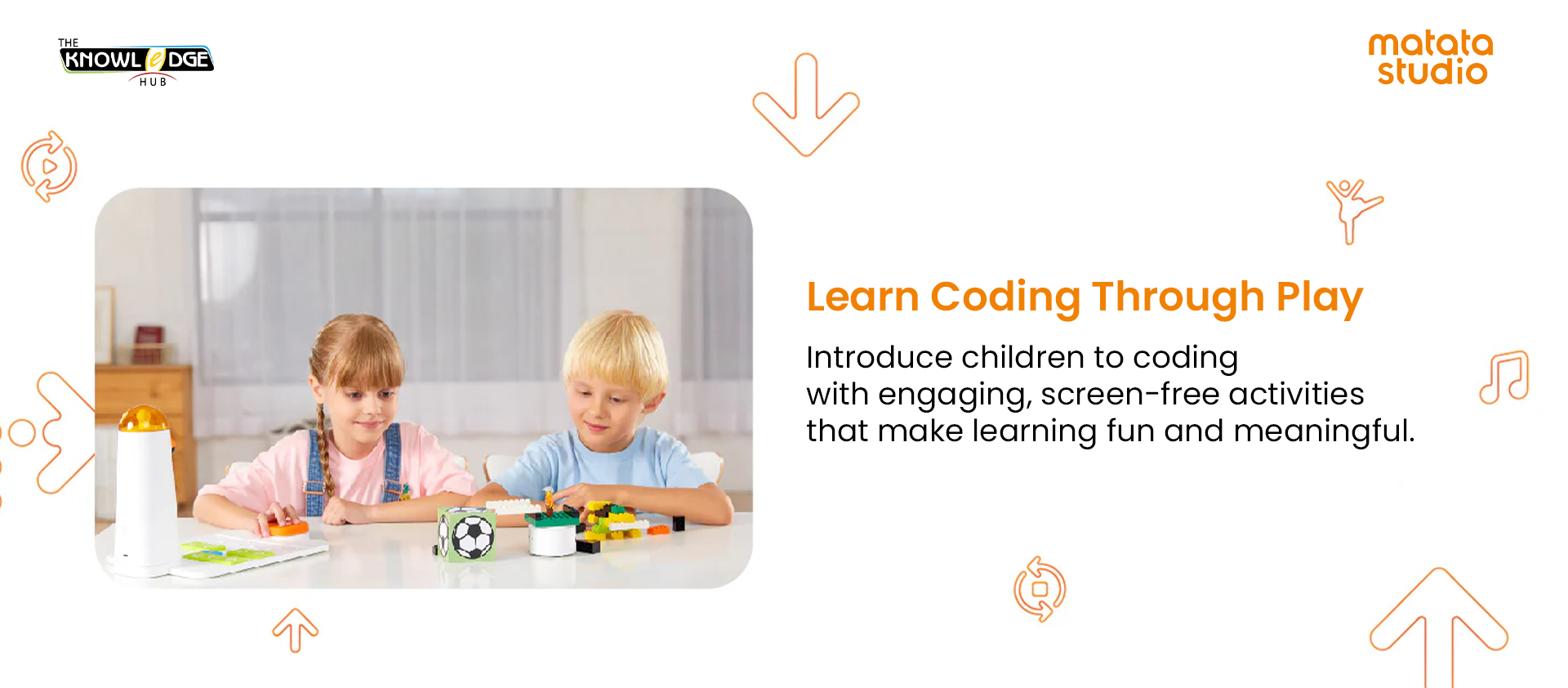
As technology continues to shape the future, coding has become one of the most valuable skills children can learn. However, introducing coding doesn’t always require a computer or tablet. Screen-free coding for kids is transforming early education by helping young learners understand programming concepts through interactive, hands-on activities that make learning both enjoyable and meaningful.
By removing screens from the learning process, children can focus on creativity, collaboration, and logical thinking while developing a strong foundation in computational skills.
What Is Screen-Free Coding?
Screen-free coding is an educational approach that teaches coding concepts without relying on digital devices. Instead of writing code on a computer, children use physical coding blocks, cards, robots, or interactive games to create instructions and solve challenges.
This tactile learning method introduces fundamental programming concepts such as sequencing, loops, directions, debugging, and problem-solving in an age-appropriate and engaging way.
For younger learners, this approach makes coding less intimidating while encouraging active participation and exploration.
Why Screen-Free Coding Is Important for Young Learners
Early childhood is the ideal time to nurture curiosity and critical thinking. Screen-free coding provides numerous benefits beyond learning programming concepts.
Encourages Computational Thinking
Children learn how to break down problems into smaller steps, recognize patterns, and develop logical solutions. These skills extend beyond coding and support success in mathematics, science, and everyday decision-making.
Promotes Hands-On Learning
Interactive learning experiences allow children to physically manipulate coding blocks and complete challenges, making abstract concepts easier to understand and remember.
Reduces Screen Time
Parents and educators are increasingly looking for ways to balance technology use in classrooms. Screen-free coding enables students to learn essential digital skills while minimizing unnecessary screen exposure.
Builds Collaboration and Communication
Many coding activities encourage teamwork, discussion, and collaborative problem-solving. Students learn to share ideas, test solutions, and improve their communication skills while working together.
How Screen-Free Coding Supports STEM Education
STEM education focuses on developing critical thinking, creativity, and innovation. Screen-free coding naturally complements STEM learning by combining logical reasoning with hands-on experimentation.
Students are encouraged to ask questions, test different solutions, identify mistakes, and refine their approaches. This process develops resilience, confidence, and a growth mindset—qualities that prepare learners for future academic and professional success.
As coding becomes an essential literacy in today’s world, introducing these concepts early gives students a significant advantage.
Making Coding Fun Through Play
Young children learn best when education feels like play. Interactive coding activities transform lessons into exciting challenges where students guide robots, solve puzzles, and complete missions using coding sequences.
This game-based approach keeps learners engaged while strengthening memory, concentration, creativity, and logical reasoning.
Rather than memorizing concepts, students actively discover how coding works through exploration and experimentation.
Preparing Students for the Future
Future careers will increasingly require digital literacy, computational thinking, and problem-solving abilities. Screen-free coding provides an excellent starting point by helping children build these foundational skills before transitioning to more advanced programming languages.
Schools that integrate hands-on coding into their curriculum are creating learning environments where students become confident thinkers, creative innovators, and effective problem-solvers.
Innovative learning solutions, such as the MatataStudio Coding Set, enable educators to introduce coding in a fun, structured, and age-appropriate manner while supporting STEM education objectives.
Conclusion
Screen-free coding for kids proves that meaningful technology education doesn’t always require a screen. Through hands-on activities, children develop logical thinking, creativity, collaboration, and confidence while learning the fundamentals of coding.
By embracing interactive coding experiences, schools can inspire curiosity, encourage innovation, and equip students with the future-ready skills they need to thrive in a rapidly evolving world.
If you’re looking to introduce engaging, screen-free coding solutions in your school, Knowledge Hub offers innovative STEM learning resources designed to make coding accessible, interactive, and enjoyable for every young learner.