

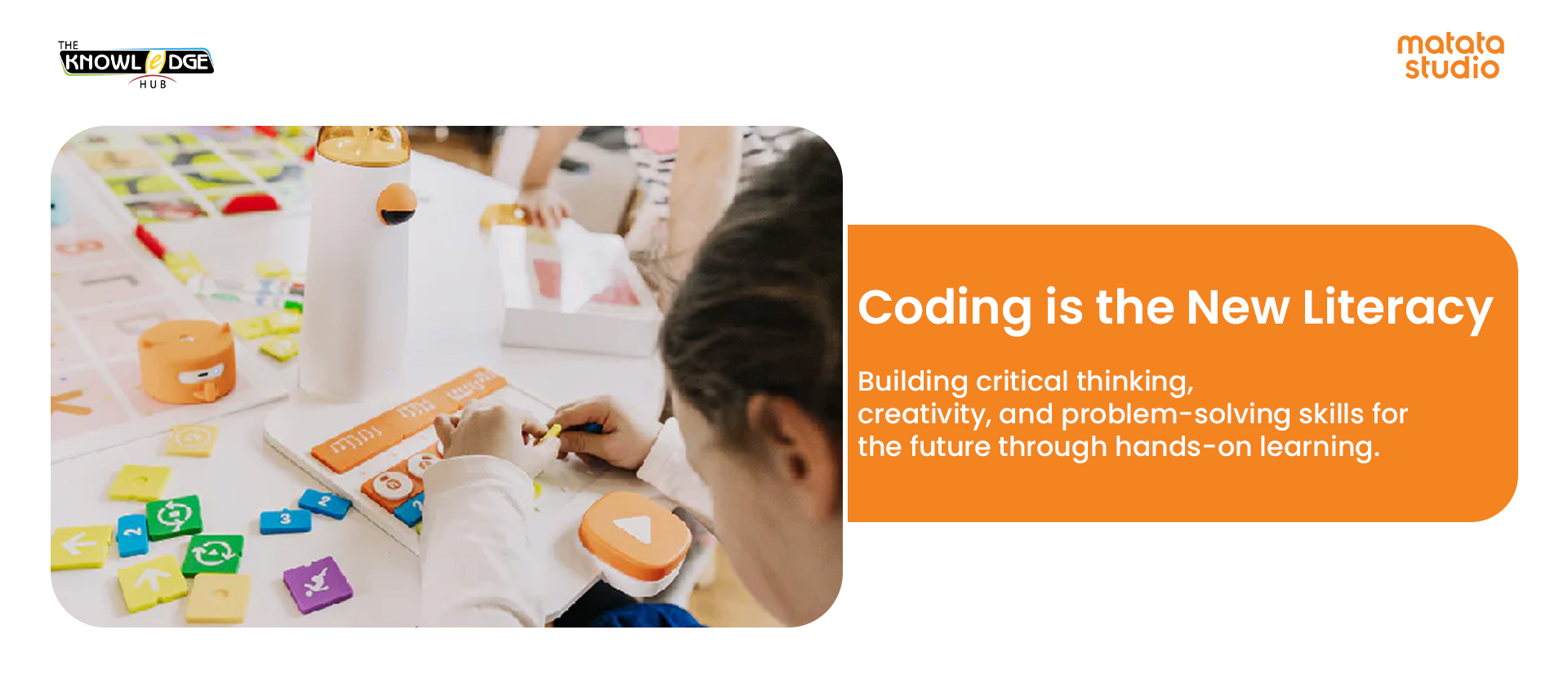
In today’s rapidly evolving world, reading and writing remain fundamental skills. However, as technology becomes an integral part of everyday life, another form of literacy is emerging as equally important: coding.
From smartphones and smart homes to artificial intelligence and robotics, technology shapes how we learn, communicate, and solve problems. This is why educators and parents are increasingly recognizing the importance of coding for kids—not simply as a technical skill, but as a way to develop critical thinking, creativity, and confidence.
Coding Is More Than Learning a Programming Language
When many people hear the word “coding,” they imagine children sitting in front of a computer writing complex lines of code. In reality, coding education for young learners focuses on much more than programming.
At its core, coding teaches children how to think logically, break down problems into manageable steps, identify patterns, and create solutions. These are valuable skills that can be applied across every subject and throughout life.
The goal isn’t to turn every child into a software engineer. Instead, it’s about helping them understand how technology works and empowering them to become active creators rather than passive consumers.
Why Coding for Kids Matters Today
The world our children will enter as adults will look very different from the one we know today. Many future careers will require digital literacy, computational thinking, and the ability to work alongside emerging technologies.
Introducing coding at an early age helps students build skills that remain relevant regardless of the career path they choose.
1. Develops Critical Thinking Skills
Coding encourages children to analyze situations, identify challenges, and find logical solutions. Every coding activity becomes an opportunity to think critically and make informed decisions.
2. Strengthens Problem-Solving Abilities
Children learn that mistakes are not failures but opportunities to improve. When a program doesn’t work as expected, students learn to troubleshoot, test ideas, and refine their approach.
3. Encourages Creativity
Coding is often viewed as a technical subject, but it is also highly creative. Students can design games, create stories, build interactive projects, and bring their ideas to life.
4. Builds Confidence
Successfully completing coding challenges gives children a sense of achievement. As they overcome obstacles and create their own projects, they gain confidence in their abilities.
5. Prepares Students for Future Opportunities
As industries increasingly adopt automation, robotics, and artificial intelligence, understanding technology becomes a valuable advantage. Early exposure to coding helps students become future-ready learners.
Beyond Screens: Learning Through Play
One of the biggest misconceptions about coding education is that it always requires extensive screen time.
For younger learners, some of the most effective coding experiences are hands-on and interactive. Through play-based learning, children can explore sequencing, logic, algorithms, and problem-solving in a way that feels natural and engaging.
This approach helps students understand fundamental coding concepts before transitioning to more advanced digital environments.
Computational Thinking: A Skill for Every Subject
Coding education also introduces children to computational thinking—the process of breaking down complex challenges into smaller, manageable parts.
These skills extend far beyond computer science.
Students use computational thinking when:
- Solving mathematics problems
- Conducting scientific investigations
- Planning projects
- Analyzing information
- Working collaboratively with peers
As a result, coding supports learning across multiple disciplines while strengthening overall academic performance.
Creating Future-Ready Learners
The skills needed in the 21st century go beyond memorization and standardized testing. Today’s students must learn how to adapt, innovate, collaborate, and think independently.
Coding provides an effective framework for developing these capabilities. Through hands-on exploration, children learn to experiment, take risks, learn from mistakes, and continuously improve their solutions.
These experiences help cultivate resilience, curiosity, and a growth mindset—qualities that are essential for success in an ever-changing world.
How MatataStudio Makes Coding Accessible
MatataStudio believes that every child should have the opportunity to develop coding and computational thinking skills in an engaging and age-appropriate way.
By combining hands-on learning, interactive challenges, educational robotics, and play-based experiences, MatataStudio enables children to explore coding concepts without feeling overwhelmed by technical complexity.
Students learn through discovery, experimentation, and creativity, building a strong foundation for lifelong learning and future success.
Conclusion
As technology continues to shape our world, coding is becoming a fundamental skill alongside reading, writing, and mathematics.
The true value of coding for kids extends beyond technology itself. It helps children develop critical thinking, creativity, problem-solving abilities, confidence, and adaptability—skills that will serve them throughout their lives.
By introducing coding early through engaging and hands-on experiences, educators and parents can empower the next generation to thrive in a digital future, not just as users of technology, but as creators, innovators, and problem-solvers.