

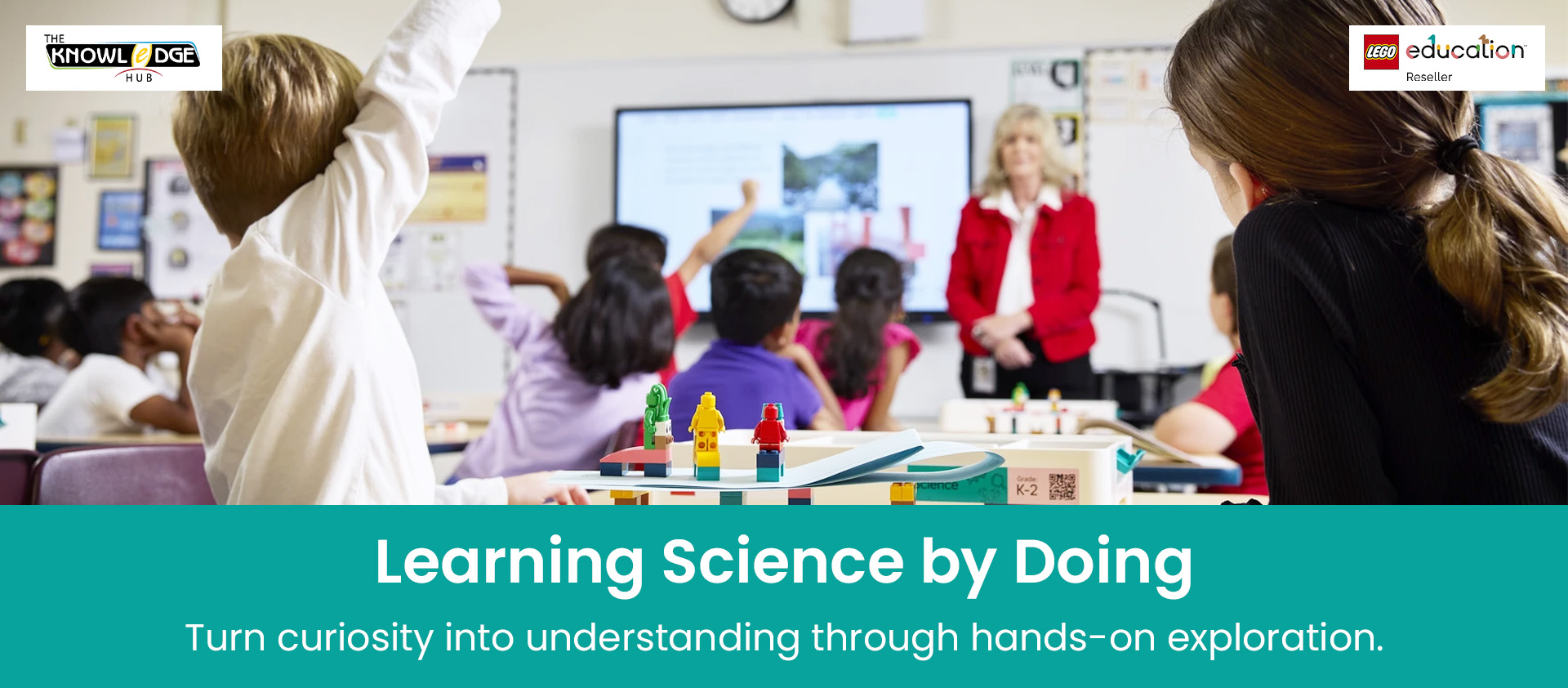
Science is most effective when students experience it firsthand. Rather than simply memorizing facts or reading theories from textbooks, learners gain a deeper understanding when they can explore, investigate, and discover concepts on their own. This is where hands-on science learning plays a vital role in modern education.
Today’s classrooms are evolving to meet the needs of future-ready learners. Schools are increasingly adopting interactive and inquiry-based teaching methods that encourage students to think critically, solve problems, and collaborate with their peers. Science education, in particular, benefits greatly from this approach because it allows students to connect theoretical concepts with real-world applications.
Turning Scientific Concepts into Real Experiences
Many scientific principles can seem abstract when taught through traditional methods alone. Concepts such as force, motion, energy, ecosystems, or matter become easier to understand when students can observe them in action.
Through experiments, investigations, and model building, students actively participate in the learning process. They make predictions, test ideas, analyze results, and discuss findings. These experiences help transform complex scientific concepts into meaningful learning opportunities that students can remember and apply.
When students are involved in the process of discovery, they become more engaged and motivated to learn. Instead of asking, “What is the answer?” they begin asking, “Why did this happen?” and “What can I try next?” This shift encourages curiosity and deeper exploration.
Developing Essential Future Skills
Science education today is about much more than mastering subject knowledge. Students must also develop skills that will help them succeed in higher education and future careers.
Activities that promote hands-on science learning naturally encourage critical thinking, creativity, communication, and collaboration. As students work together to investigate problems and test solutions, they learn how to share ideas, evaluate evidence, and make informed decisions.
These experiences also strengthen resilience. Not every experiment produces the expected result, and that is an important part of learning. Students discover that mistakes can lead to valuable insights and new questions, fostering a growth mindset that supports lifelong learning.
Supporting Inquiry-Based Learning
Inquiry-based learning places students at the center of the educational experience. Rather than simply receiving information, learners actively seek answers through observation, experimentation, and reflection.
This approach mirrors the work of real scientists. Students learn how to ask meaningful questions, gather data, evaluate evidence, and communicate their conclusions. As a result, science becomes a dynamic and engaging subject rather than a collection of isolated facts.
Tools such as LEGO® Education Science help bring inquiry-based learning to life by providing structured yet flexible opportunities for exploration. Students can build models, conduct investigations, and collaborate with classmates while developing a strong understanding of scientific concepts.
Creating Engaged and Confident Learners
One of the greatest benefits of interactive science education is the confidence it builds in students. When learners see the results of their efforts and successfully solve challenges, they gain a sense of achievement and ownership over their learning journey.
Engaged students are more likely to participate, ask questions, and remain curious about the world around them. By encouraging exploration and discovery, schools can create learning environments where students feel empowered to think independently and develop a genuine passion for science.
Conclusion
The future of science education lies in active participation, exploration, and discovery. By moving beyond passive instruction and embracing experiential learning, educators can help students develop both scientific understanding and essential life skills.
Through hands-on investigations, inquiry-based learning, and collaborative problem-solving, students become confident learners who are prepared to navigate an increasingly complex world. Hands-on science learning transforms science from something students study into something they truly experience.